
TL;DR
PageSpeed matters, but a bad score alone does not prove a business website is broken or needs a rebuild. What matters most is whether the site feels fast enough for real users and supports lead generation.
- A red PageSpeed score can look serious without matching the real customer experience.
- For many small business websites, loading in about 2 to 3 seconds is usually good enough.
- After a site is fast enough, stronger pages, better targeting, clearer calls to action, and more trust signals often matter more.
Quick win: Check images, scripts, plugins, hosting, and caching before paying for a rebuild based on one scary speed screenshot.
If you have owned a business website for more than five minutes, somebody has probably emailed you something like this:
“Your website is loading too slowly and it is crushing your Google rankings. We ran an audit and found critical issues. Here is your score…”
Then comes the scary report full of red numbers, charts, and acronyms that look like they belong in a spaceship.
That pitch works because page speed is just technical enough to sound urgent and just vague enough to make people nervous.
Here is the truth: page speed matters, but bad scores do not automatically mean your site is broken, your rankings are tanking, or you need to pay somebody for a rebuild.
That does not mean speed is fake. A slow site can absolutely hurt conversions and user experience.
It does mean you should treat scary speed screenshots the same way you would treat a smoke alarm that goes off while you are making toast. It might be warning you about a real issue. It might also be making a lot more noise than the situation deserves.
Page Speed Reality Check
Google’s PageSpeed tool is useful, but it is not a simple pass-fail test for business websites. Even huge, well-funded brands like Apple, Walmart, YouTube, and Google often post scores that look surprisingly mediocre or even poor. If companies with massive budgets and technical teams do not always ace these tests, a small business should be careful about treating one disappointing score like proof that its site is failing.
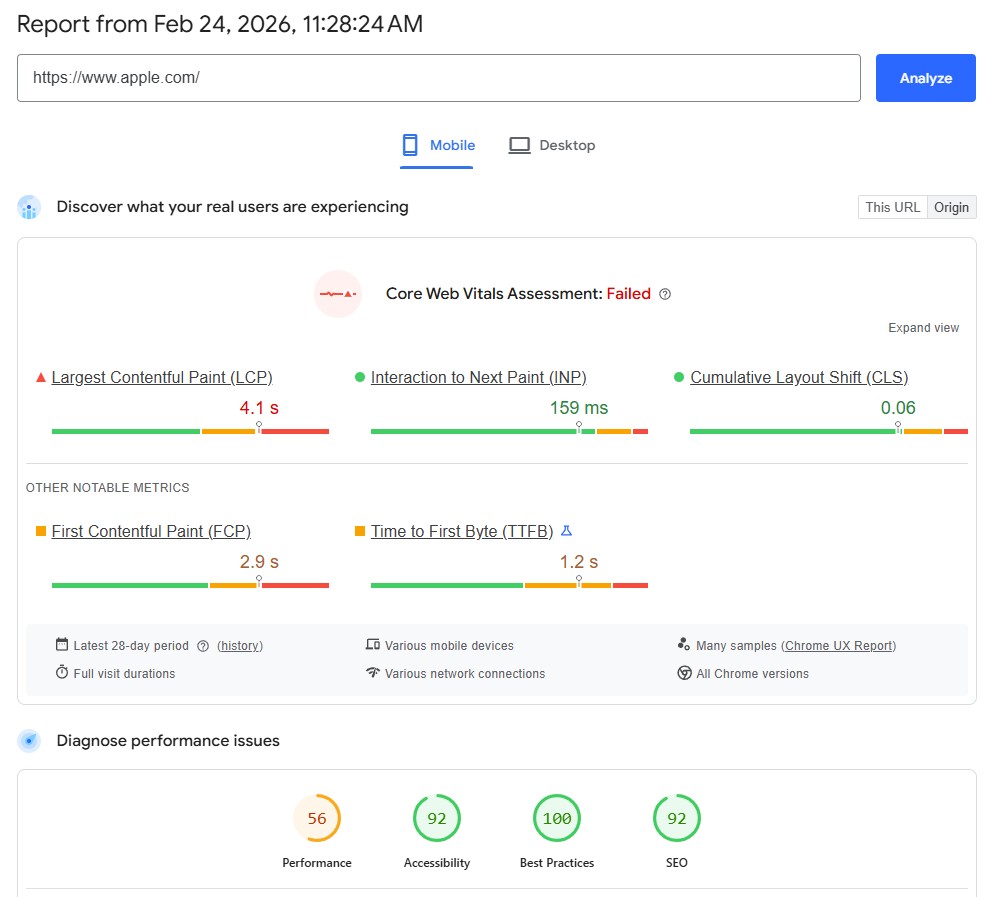
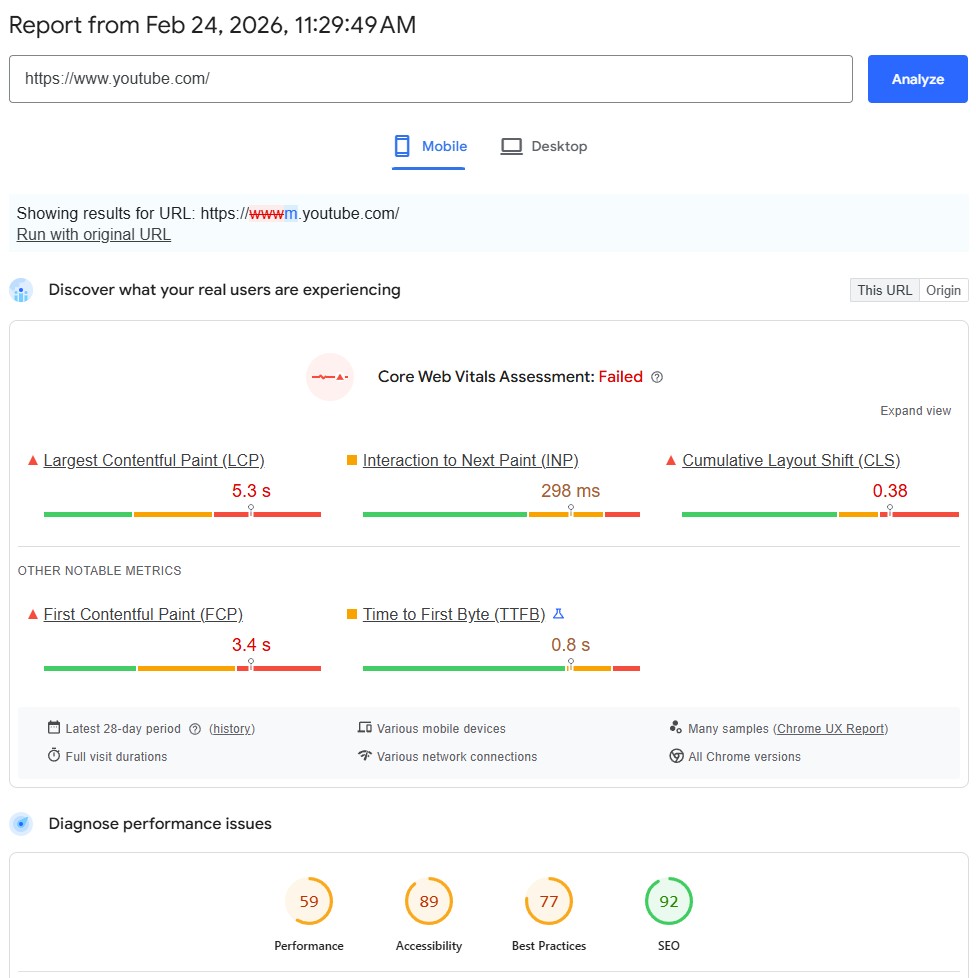
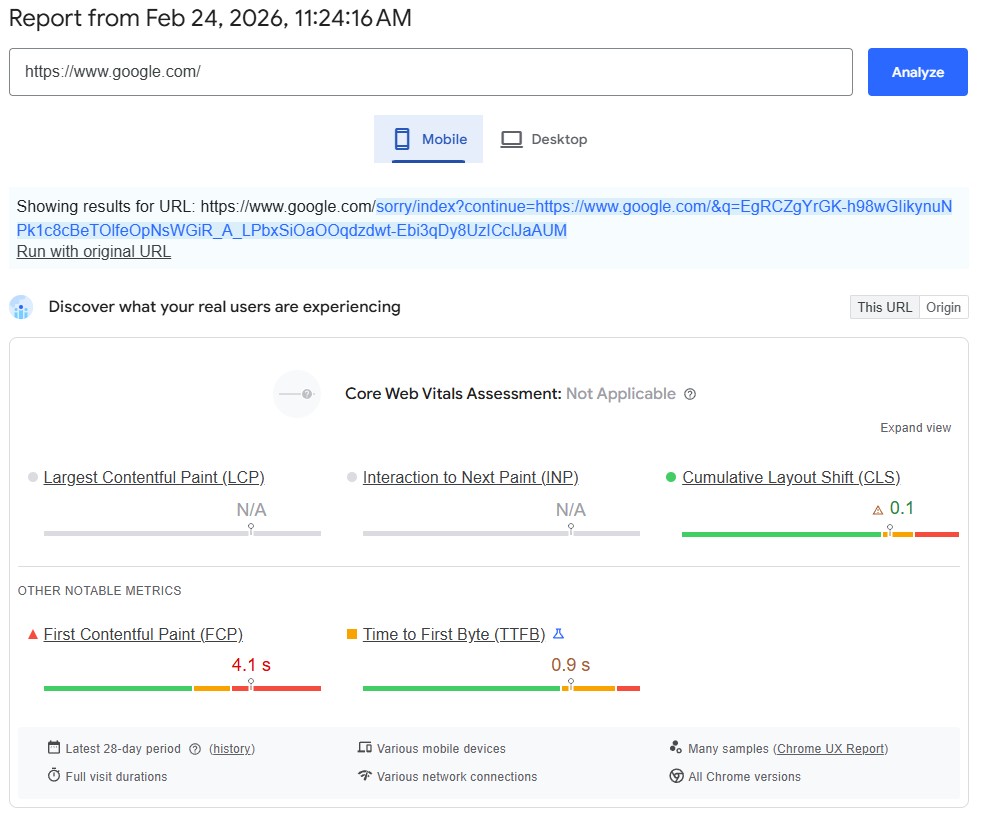
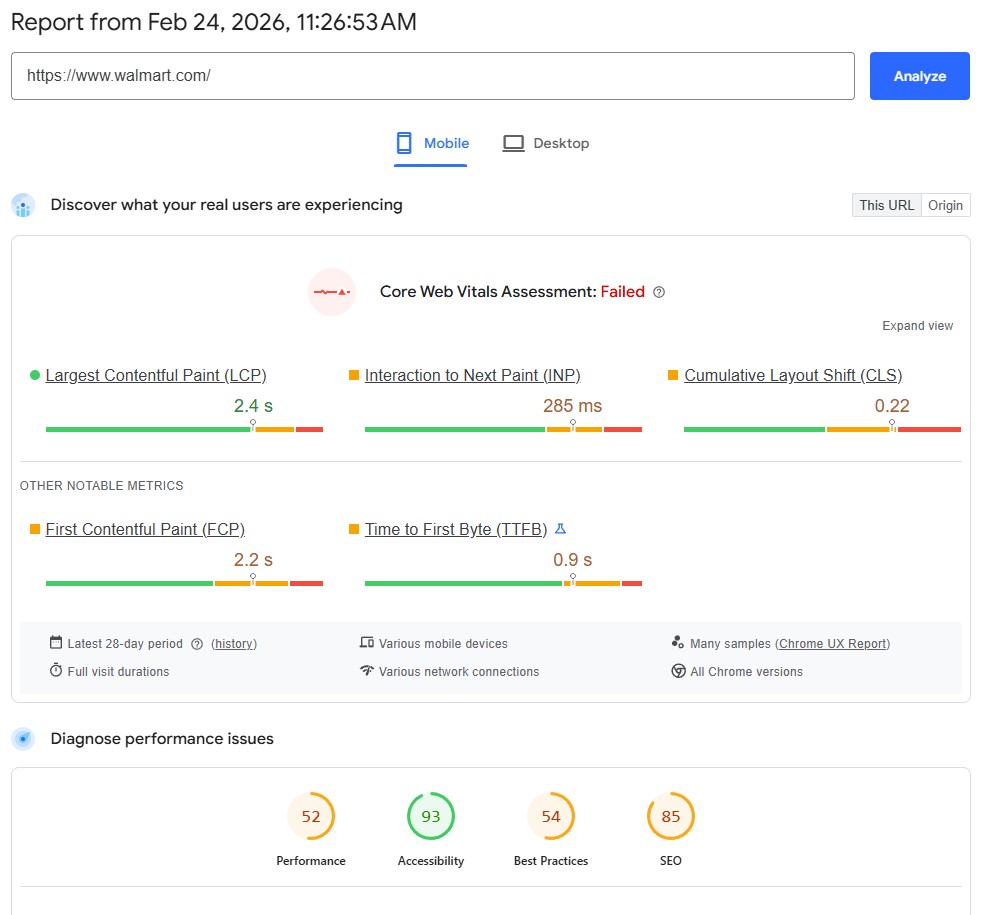
The bigger problem is how those scores get used in sales pitches. A red number is easy to weaponize because it looks objective, final, and urgent. But one test result does not tell the whole story.
A Better Example of Why Scores Can Mislead
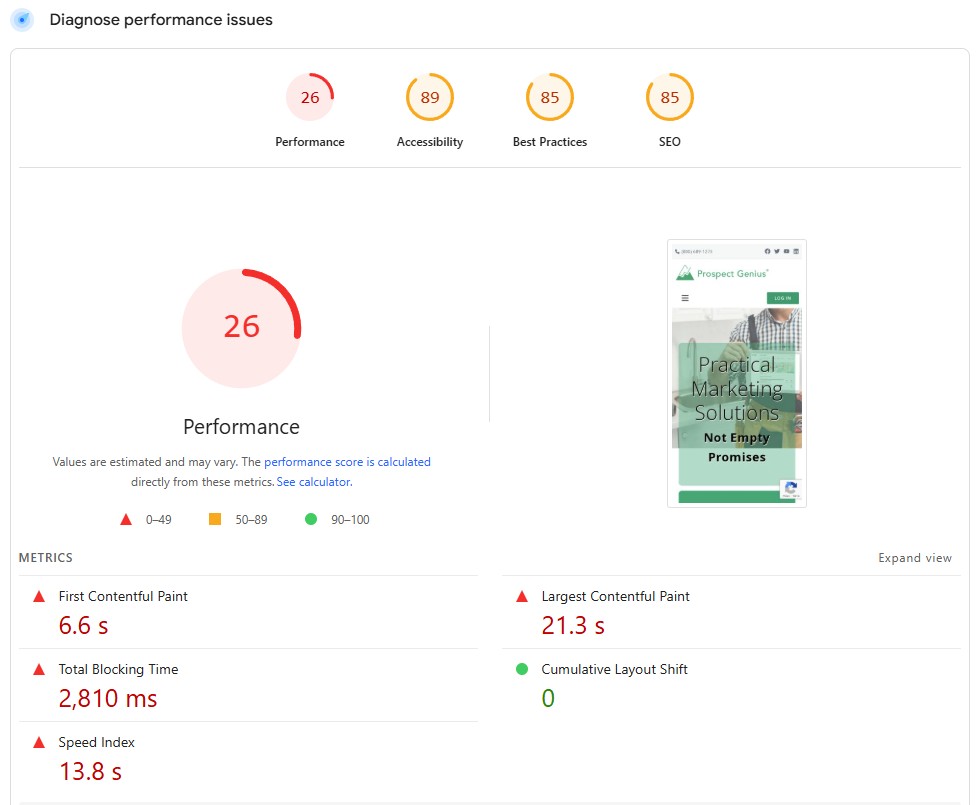
Take prospectgenius.com as an example.
In the first screenshot above, the mobile PageSpeed score is 26 out of 100. That is obviously not a flattering number. More importantly, the audit reports a First Contentful Paint of 6.6 seconds. In plain English, that means the tool is claiming it takes more than six seconds before the user sees the first meaningful piece of content.
If that reflected real-world use consistently, it would be a serious problem.
But now compare that audit result with actual load videos:
Those videos suggest the site is performing far better in real use than the audit score implies. They do not show anything close to six seconds before content appears, and the full page appears usable in about three seconds.
That does not prove every speed test is wrong. It does show why a scary screenshot by itself is not enough evidence to justify panic, a rebuild, or a big invoice.
- A 100 out of 100 score is not the goal for most real business websites.
- A bad-looking audit does not automatically match the real customer experience.
- If somebody is selling you “perfect scores,” they may be selling busywork more than meaningful improvement.
What Actually Matters: Fast Enough
This is the question most business owners really want answered: what counts as fast enough?
Here is a practical definition:
- the site loads reasonably on a normal phone
- users can interact with it quickly
- key pages are not flagged as poor in real-user data
- leads are not getting lost because the site feels sluggish
As a rule of thumb, if your site loads in 2 to 3 seconds, you are probably in good shape. If your load times are more like 6 to 7 seconds, you should get to work.
That is the target. Not perfection. Not bragging rights. Not a prettier screenshot.
Yes, speed is a ranking factor. Yes, very slow sites can absolutely hurt performance. But once your site is in the “not frustrating to use” range, speed is usually just one piece of a much bigger puzzle.
For many small businesses, better service pages, stronger location targeting, clearer calls to action, and more trust signals will move the needle far more than obsessing over squeezing a few extra points out of a speed audit.
How Speed Gets Weaponized in Sales Pitches
Speed is easy to sell because most business owners do not have a clear finish line. If “fast enough” feels vague, then a pushy marketer can always claim your site is still not good enough.
That is where the scare tactics come in.
Common red flags include:
- They show one mobile score like it is the final verdict. Mobile audits are intentionally harsh.
- They run one test once and present it like settled science. Results vary by device, connection, page, and moment.
- They only show lab data. Lab tests matter, but real-user data matters more.
- They jump from “this could be improved” to “you need a rebuild.” Most sites have cheaper fixes first.
- They imply speed alone will transform rankings. It can help, but it is rarely the whole story.
The honest version is less dramatic: speed matters most when your site is genuinely slow. Once you are in a decent range, the returns often get smaller.
Speed Fixes That Usually Matter Most
If your site really is slow, the biggest improvements usually come from a few common areas.
- Images
- Large, unoptimized images are one of the most common reasons small business websites feel slow.
- Scripts and plugins
- Too many widgets, popups, tracking tools, and plugins can add weight and delay how quickly a page becomes usable.
- Technical setup
- Sometimes the biggest issue is not the page design, but the hosting, caching, and other performance settings underneath it.
If You Only Remember 3 Things
- Bad speed scores do not automatically mean your site is broken.
- Real-world usability matters more than one scary lab screenshot.
- Get your site to “fast enough,” then focus on bigger business wins.
Do not let a red score talk you into spending real money on fake urgency.
Page Speed FAQs