
TL;DR
Google is using AI to do more local-business filtering before a customer ever makes a call, so clear and trustworthy business signals matter earlier in the decision process.
- AI is now the first gatekeeper between you and the customer.
- Google Business Profile details need to be accurate, complete, and current.
- Detailed reviews, fresh photos, and consistent business info help a local business look more relevant and legitimate.
- A website should quickly show services, service areas, contact information, and signs that the business is real and trustworthy.
Quick win: Review the Google Business Profile, website, and listings together and fix any outdated hours, service areas, phone numbers, or missing details.
Google just made changes to Maps that a lot of small business owners probably will not notice right away. Read the announcement here.
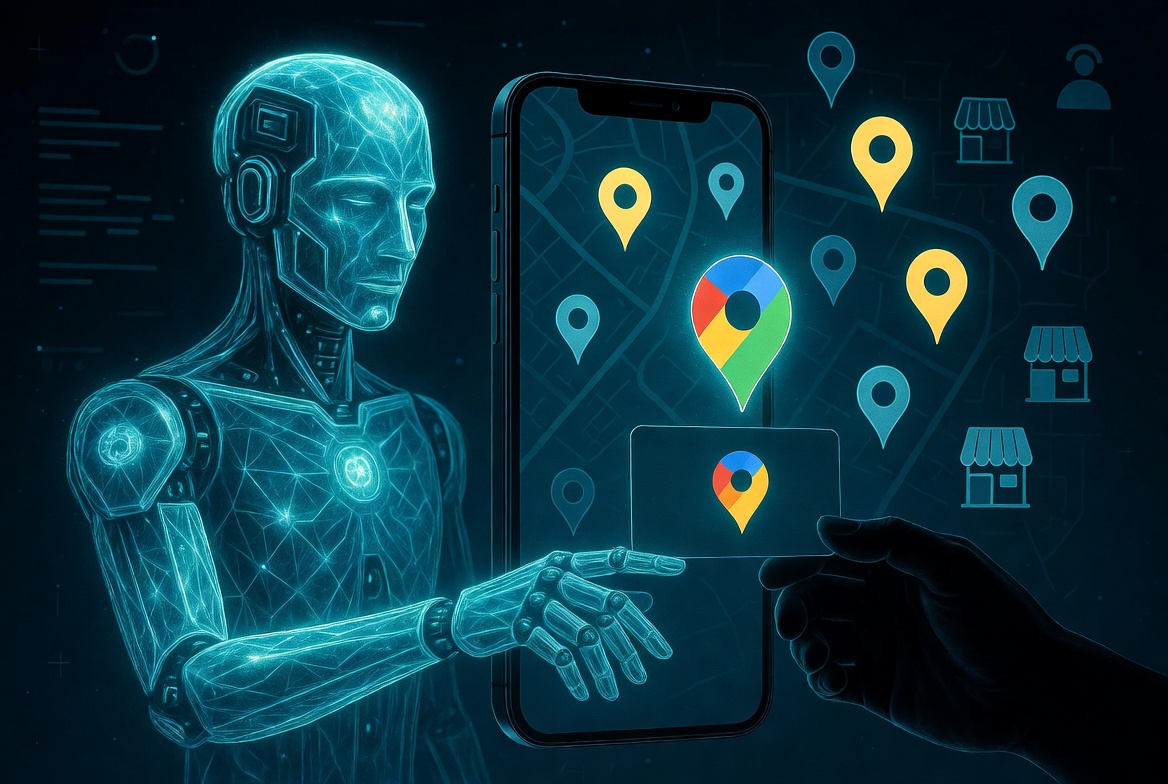
But they should, because the bigger story is not just a few new features inside Google Maps. It is that Google is continuing to move toward a world where customers ask more specific questions, Google does more of the sorting, and the customer spends less time clicking around and comparing businesses one by one.
In other words, this is another sign that AI is starting to play a bigger role in who gets the call.
And frankly, this is exactly the kind of shift we warned about earlier this year in our post on why businesses will increasingly have to convince the customer’s AI first.
For years, local marketing worked like this:
Search → compare → research → customer calls
The homeowner did the sorting. Your job was to look good when they checked you out.
Now Google is starting to do more of that sorting for them.
That means the process is shifting toward:
Ask → AI filters → AI recommends → customer calls
And that changes everything.
Because now, before you ever get a chance to sell the human, you have to satisfy the bot.
If Google’s AI does not like the signals it sees, your business may never make it into the set of options the customer seriously considers. You are not just competing to rank anymore. You are competing to be recommended.
Why this matters for local businesses
Most consumers do not want to do a deep research project just to hire somebody. They want a company that looks trustworthy enough, relevant enough, and legitimate enough to call.
That has always been true.
What is changing is that AI is starting to compress that trust-building process.
Before, the customer did the hunting themselves. They checked your reviews, looked at your website, maybe asked around in a Facebook group, or texted a neighbor.
Now Google is increasingly doing more of that work for them.
That means the same things that have always mattered in local marketing still matter, but they now matter earlier and often with less room for error.
Google’s AI still has to pull from something. It is reading the signals your business puts out online: your Google Business Profile, your reviews, your photos, your website, and the consistency of your information across the web.
If those signals are weak, outdated, or inconsistent, your business becomes easier to overlook.
What matters more as AI plays a larger role?
Your Google Business Profile
Your Google Business Profile is one of the clearest sources Google has for understanding who you are, what you do, and where you work.
If it is incomplete or outdated, that works against you.
Make sure your primary category, service areas, hours, phone number, website, and business description are accurate and current. If you need help with that, this is exactly why Google Business Profile optimization matters.
Your reviews
Reviews are not just social proof anymore. They are also data.
Google is not only looking at your star rating. It can learn from how many reviews you have, how recent they are, what services people mention, what locations they mention, and what patterns show up in the wording.
To illustrate the difference:
- Bronze: “Great job”
- Silver: “They showed up on time, explained the problem clearly, and fixed it the same day”
- Gold: “Bob came out to our Dallas home, fixed our water heater that afternoon, explained everything clearly, and left the area spotless”
That third review gives both Google and the customer a much clearer picture of what kind of business you are.
That is the kind of detail you want more of. For a deeper look at that, here is more on getting better reviews.
Your photos
Most service businesses still do a weak job here.
Real photos of your trucks, team, equipment, jobs, and finished work help your business look current, active, and legitimate. Old photos, bad photos, or no photos at all can make you look neglected.
That matters even more if Google is increasingly trying to understand and compare businesses faster.
Your consistency across the web
Your business name, phone number, service areas, and core details should line up across your Google profile, your website, and other listings.
If one source says one thing and another says something else, that creates friction. And when Google is stitching together a picture of your business from multiple sources, that friction can cost you.
This is what people mean when they talk about your NAP match. You can read more in this post on what NAP match is and why it matters.
Your website
Your website still matters because it helps confirm the basics.
If someone clicks through, they should be able to tell almost immediately:
- what services you offer
- what towns or areas you serve
- how to contact you
- whether you look like a real company they would trust in their home
If your Google profile looks decent but your website is thin, outdated, or confusing, that can still cost you the call.
What should you do right now?
Do not overcomplicate this. You do not need to chase every new AI buzzword. You need to tighten up the signals your business is already sending.
- Tighten up your Google Business Profile
- Make sure your category, hours, phone number, website, service areas, and description are accurate and current.
- Ask for more reviews, and better ones
- Do not just ask for stars.
- Ask happy customers to mention the actual service, the location, what stood out, and why they were satisfied.
- Add fresh photos regularly
- Use real photos of your team, trucks, job sites, equipment, and finished work.
- You want your profile to look active, not forgotten.
- Respond to reviews
- Replying to reviews shows that your business is paying attention.
- Make sure your website covers the basics clearly
- Do not make people hunt for what you do, where you work, or how to contact you.
- Fix inconsistent business info before it costs you calls
- If your listings are incomplete, outdated, or inconsistent, clean that up now.
- If you want help cleaning it up, our Google Business Profile optimization service is built for exactly that.
The takeaway
The fundamentals of local marketing have not disappeared.
The shift is that AI is increasing Google’s influence over which businesses get surfaced, understood, and taken seriously first.
That means getting found is no longer enough by itself. Your business has to send clear, consistent, trustworthy signals that help both Google and the customer understand why you are a good fit.
And that is why this Google Maps change matters.
It is not just a product update. It is another sign that the future we talked about earlier, where businesses increasingly need to convince the AI before they ever get a chance to pitch the customer, is already starting to show up in local search.
If your Google presence has been an afterthought, now is the time to tighten it up.
AI Optimization FAQs